
Plasma donation: saving lives like Suraiya’s
Donor centres across the country each need 2,000 new plasma donors in 2026 to save lives like Suraiya's.
Suraiya was born premature and spent the first year of her life in and out of hospital with the rare Kawasaki disease. She experienced severe symptoms, including rashes, red eyes, nosebleeds and swollen hands.
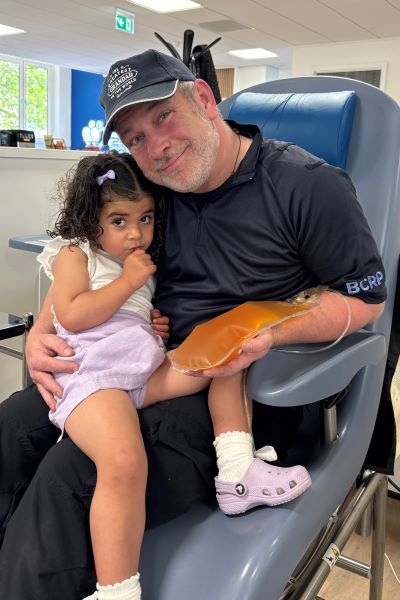 Suraiya, now 3, was treated with immunoglobulin – medicine made from donated plasma – which played a crucial role in her recovery. She was thankfully given the all-clear in February 2025 and is now fit and well.
Plasma is a yellowish liquid that makes up approximately 55% of your blood. It carries platelets, red blood cells and white blood cells around the body.
Plasma also contains antibodies, known as immunoglobulins, which fight infection. These antibodies are made into medicines to help people with immune disorders, genetic conditions, and rare diseases - people like Suraiya.
In honour of her treatment, Suraiya's grandfather Paul has changed from blood to plasma donation. He has given plasma 15 times, donating at Birmingham Plasma Donor Centre, which he passes multiple times a day while on patrol working for Birmingham BID.
Suraiya celebrated her second birthday at Birmingham, one of three plasma donor centres alongside Reading and Twickenham, accompanying Paul to his donation.
Plasma donation takes around 35 minutes, with the appointment lasting just over an hour, making it an easy change to make from donating blood. The NHS needs more donors like him to help the 17,000 people who rely on medicines made from plasma.
Suraiya today is strong, talkative, and kind. Since spending time in hospital, she has developed a caring personality and loves playing doctor with her toy stethoscope, checking others' vitals.
We particularly need more people with A positive, O positive and B positive blood types to donate plasma.