

AB negative blood type
Your blood type is determined by genes inherited from your parents.
Whether your blood type is rare, common or somewhere in between, your donations are vital in helping save and improve lives.
How rare is AB negative blood?
1 in 100 donors is AB negative
AB negative is the rarest blood type in the ABO blood group, accounting for just 1% of our blood donors.
In total only 3% of donors belong to the AB blood group.
Who can receive AB negative blood?
AB negative and AB positive people
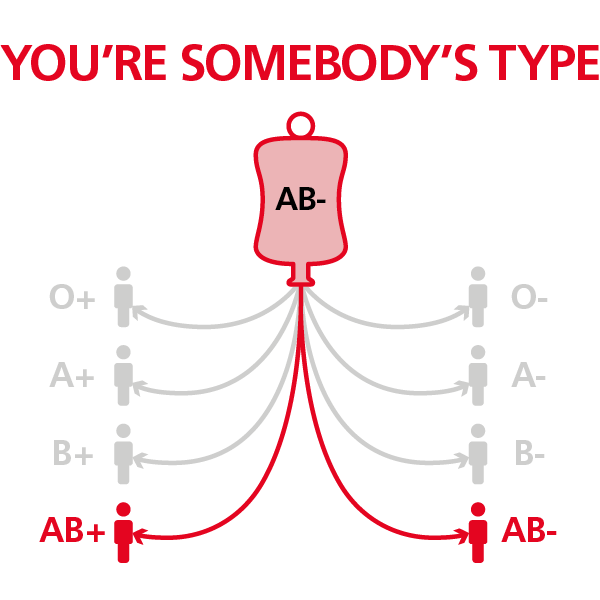
What blood can AB negative people receive?
Any Rh negative blood type
People with AB negative blood can receive donations from:
- AB negative donors
- O negative donors
- A negative donors
- B negative donors
Why is AB negative blood so important?
It’s the rarest blood type and important for platelet donation
AB negative is the rarest blood type, so finding new blood donors can be a challenge.
We can take plasma from AB negative blood donations as it can help treat patients of all blood types.
We generally meet the demand for AB negative blood from our male donors.
This is because female donors (especially those who have been pregnant) can have antibodies that, while no danger to themselves, can be life threatening to patients transfused with their plasma.
If demand for AB negative blood rises, we contact our AB negative female donors directly to ask them to donate blood.
We also need AB negative donors to give platelets. Platelets can help people with cancer and people who’ve lost a lot of blood after an accident, organ transplant or surgery.