
Ultra rare
Mina is one of fewer than 10 people in the country with U and N negative blood. She is classed as an 'ultra rare' donor, meaning she is individually contacted when her blood is needed, unlike the other 99.99% of donors.
Blood from donors like 26-year-old Mina is frozen and kept at -80°C in the national frozen blood bank in Liverpool, where some of the world's rarest blood is stored. Mina, from Somerset, had the chance to visit the centre and even see her own blood.
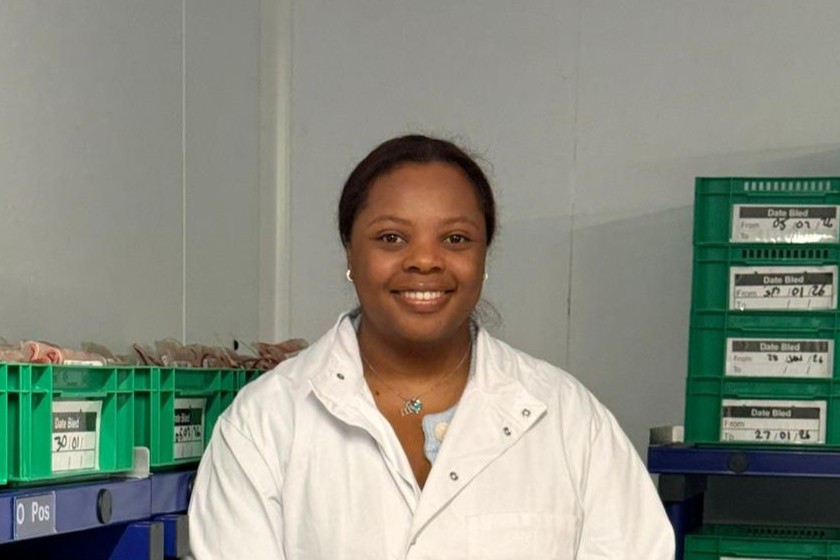 "It's cool to have such rare blood and to be able to help people," Mina says. Blood like hers can be stored for up to 30 years, with the centre keeping around 1,200 units.
Frozen blood can be thawed out in advance of planned care, such as surgeries, as well as in emergencies. The team in Liverpool are on call 24/7 for urgent requests.
Mina's blood has neither the U nor the N antigen. These are markers on the red blood cells that almost everyone has – in fact, the U antigen is so named because it was thought to be universal.
Mina's blood is often used to treat people with sickle cell disorder, for which there is growing demand and an urgent need for more donors of Black heritage. In the last 12 months alone, NHS Blood and Transplant has seen a 33% increase in the number of donors needed to be invited to donate blood to support patients with sickle cell.
Mina says: "It makes me feel very special and honoured, actually, that I could help someone that is really poorly."
Around 20% of all requests to the rare donor panel are to support people with sickle cell, thalassaemia, and other haemoglobinopathies.
Overall requests of all kinds to the rare donor panel are up about 15% in the last five years.