

Spring 2026 update
In our spring 2026 update, we celebrate a year of lives being saved by UK-derived plasma medicines and look into the rules around children attending donation sessions. Meanwhile, we’ve partnered with The Science Gap and PATCAM to launch the Bloodlines initiative.
One year of UK plasma medicines
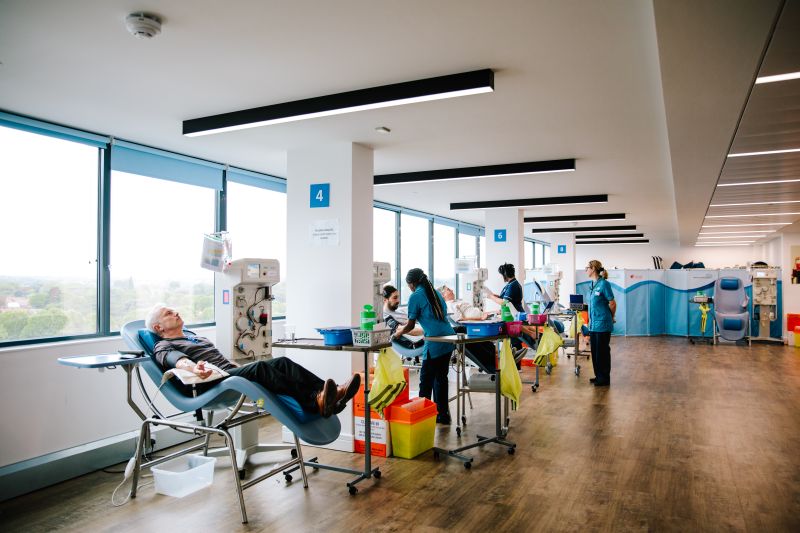
March 2026 marked a year since the first NHS patients in a generation started receiving lifesaving medicines made from the plasma of UK donors.
NHS patients began receiving medicines made from UK-donated plasma in 2025, after the 25-year-long ban on the use of UK plasma was lifted in 2021.
The change has allowed the UK to supply vital treatments to thousands of NHS patients for a number of serious and life-threatening conditions.
Plasma contains antibodies called immunoglobulins. These can be made into medicines to treat people whose immune systems aren’t working as they should be.
Over 3,200 patients have now been treated with immunoglobulin treatments made from UK-donated plasma. Thousands of patients have also benefitted from UK plasma-derived albumin.
Children at donation sessions
We wish to remind donors that although children are welcome at our donation venues, they must be accompanied at all times if aged 11 or younger.
The person accompanying the children must be known to them and not donating in the next hour. This is so that they may take care of the children in case of an emergency. Donation sessions can present hazards to children if they are not supervised while their parent or carer donates.
If you have no one to support your child at one of our venues, we can help you make an appointment for when you have childcare arrangements.
Appointments are available at a range of dates and times and at many of our venues. Please call us on 0300 123 23 23 and one of the team happily support you.
Read the full details on children at donation sessions here.
Bloodlines
NHS Blood and Transplant (NHSBT) has partnered with The Science Gap and PATCAM to create Bloodlines: a movement aiming to make blood donation visible, relevant, and rooted in culture.
Blood donation saves lives but not everyone has the same access to the blood they need. For people with Black heritage, finding the right match can be harder.
Only 3% of blood donors are from Black heritage backgrounds and we urgently need 12,000 more donors of Black heritage to meet demand.
To help change that, Bloodlines will use social media to promote real stories, trusted voices, and visual storytelling to bridge the gap between awareness and action, inspiring more people to donate blood.
With myth-busting and real talk, Bloodlines aims to make blood donation feel like a normal part of life, people of Black heritage can feel part of and proud about.
Look out for Bloodlines on Instagram, TikTok, YouTube, and LinkedIn.