

Sight restored: a plasma story
Did you know that donated plasma – including the plasma recovered from whole blood donations – can help to restore sight?
Two weeks after giving birth to her first son, Jessica Kent-Hazledine woke up with very little vision in her left eye. She naturally just thought it was the tiredness that comes with being a new mum, but after several days it still hadn't improved. In fact, it had become worse: Jessica started to lose vision in her right eye as well.
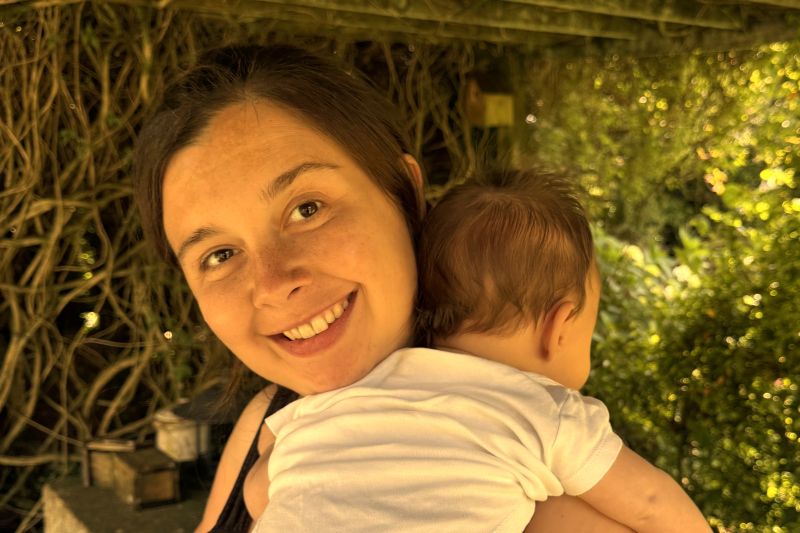 "I thought I should probably get it checked out," says 33-year-old Jessica, "and the next thing I knew, I was having an urgent MRI and blood tests. It was all very scary. I was thinking the worst.
"When my vision went in my right eye, too, I was terrified – I thought I wouldn't be able to see my baby grow up. I wouldn't be able to see how his face changed or when he took his first steps or had his first day at school.
"I had been a mum for two weeks and was faced with the prospect of not being able to see my son again, it was awful.
Jessica was immediately referred to NHS Blood and Transplant's therapeutic apheresis services (TAS), where she received five plasma exchange transfusions.
Plasma exchange transfusions involve removing the plasma from a patient's bloodstream and replacing it with fresh plasma from donors. The plasma exchanges removed the antibodies in Jessica's blood that were attacking and damaging the protective layer around the nerve fibres around her eyes. Thankfully for Jessica, treatments such of these are available because of blood and plasma donors.
"Thankfully, within days and after trying some other treatments, my consultant had arranged a plasma exchange with the TAS team, who were just fantastic," says Jessica. "I was so very, very grateful for that.
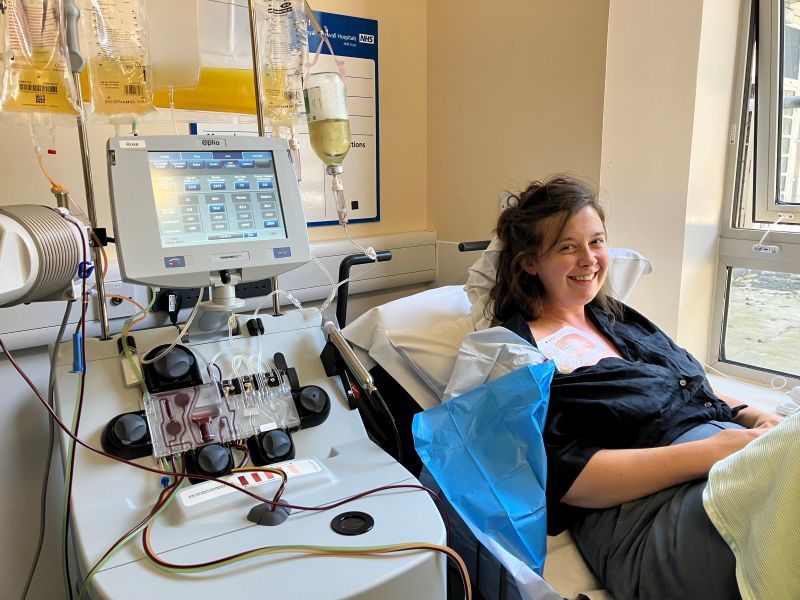 "The plasma exchange process was so simple. I had five exchanges and by the third, things had started to improve and I was tentatively optimistic.
"By the fifth, I felt pretty much back to myself, it felt like magic! It's been almost a year now and my sight is so much better."
Plasma is the largest component of your blood, making up approximately 55% of its volume. It contains antibodies which strengthen or stabilise the immune system meaning when you are donating blood, your plasma is helping people like Jessica.
Plasma donation is different to blood donation and uses a machine to separate the plasma from the other blood components. These other components are instantly returned to your body, allowing you not only to give more plasma in each session, but to donate more often too.
You can donate plasma at one of three plasma donor centres, located in Birmingham, Reading, and Twickenham.
Jessica can now see clearly out of her right eye and has around 75% sight in her left, meaning she can look after her son and watch him grow up.
"I'm eternally grateful to those people who donated blood and plasma," she says, "it's only thanks to them that that plasma was available and I'm able to see again.
"I don't think people realise just how much good donation can do – we all know blood can be used in emergencies but it can also be used to help so many people like me. I'd urge absolutely everybody who is eligible to go and give blood or plasma – and thank you to those who already do."