
Record year for NHS Stem Cell Donor Registry
A record number of people registered as stem cell donors through the NHS last year – helping give more seriously ill patients the chance of having a life-saving transplant.
During 2025/26, the NHS Stem Cell Donor Registry saw more than 29,000 blood, plasma and platelet donors say yes to joining the registry, the highest number in 3 decades. (1)
This Stem Cell Awareness Week (12 to 18 October), NHS Blood and Transplant (NHSBT) is urging all eligible blood, platelet and plasma donors (those aged 17 to 40) to join the NHS Stem Cell Donor Registry to help even more people – the larger and more diverse the registry, the more chance of finding a match for those waiting for a stem cell transplant.
There is a particular need for people from minority ethnicities to come forward as donors. Building a diverse registry is vital as patients are more likely to find the best stem cell match from someone with a similar ethnic background. Nearly 5,000 of those who registered last year were of Black, Asian and other ethnic heritages – a figure up 5% on the previous year (2) But only 12% of the more than 400,000 potential donors registered overall are from these backgrounds. (3)
Joshua's story
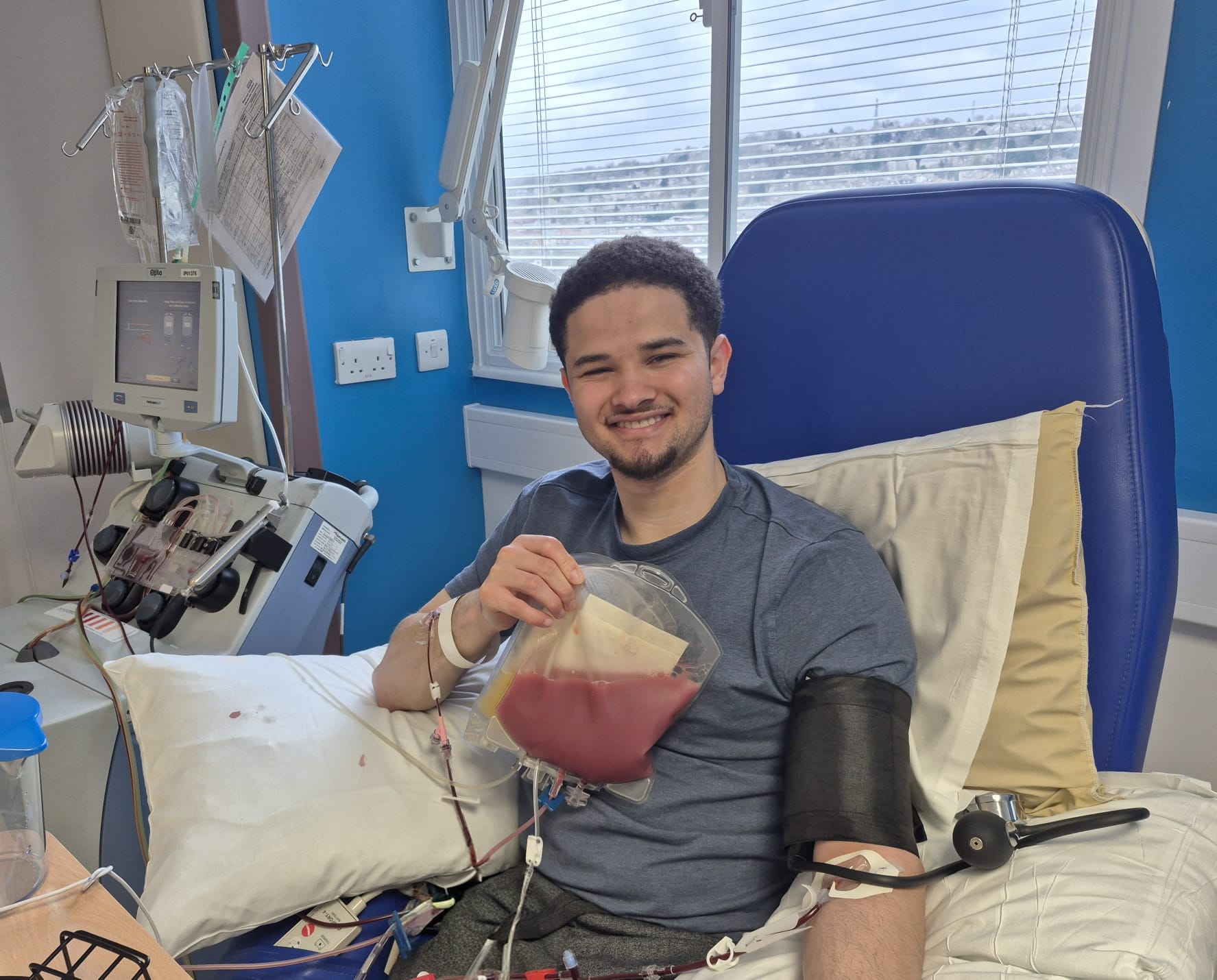 Joshua Pipes, aged 26, signed up to be a stem cell donor last year and just a few months later, earlier this year, donated to a patient. Mr Pipes, from Nottingham, says:
"I became a blood donor because I saw advertisements that donations were needed, particularly from people of African/Afro-Caribbean heritage. Being a mixed-race person I do fit into that and I wanted to help. I am O positive and RO subgroup so my type is needed.
"When it comes to stem cell donation, I saw posters at my first blood donation session and went away to think about it after talking to staff. I asked to sign up the second time.
"I think there is a fear it'll be invasive but stem cell donation isn’t like that, you have to have some injections – there’s some mild discomfort - but then you donate on a machine – it's similar to blood donation.
"It was very easy to join the registry. I was officially all typed and ready by November and in December I found out I was a match for someone.
"I got a phone call and I was really surprised, most people don't hear for years or maybe never. I was very excited because it's the reason why I signed up, I wanted to help someone."
Speaking about his donation, Mr Pipes adds:
"It went fine, it passed really quickly and the staff were lovely. After my donation I was proud and very happy, I told all my family and friends. I was really well looked after and supported all through the matching and donating and afterwards."
Mr Pipes hopes to inspire others and says:
"People should sign up to be a stem cell donor because they can really make a difference to a life, they can save a life.
"Ethnicity can play an important role in finding a stem cell match, making donors from diverse and underrepresented ethnic backgrounds especially important.
"The donation is honestly an absolutely great thing to do. I do wonder of course about that person I donated to. I feel connected to them and hope they are ok and getting on well.
"I'm just happy that I’ve been able to make a difference to someone else's life."
The NHS Stem Cell Donor Registry is aiming to recruit 30,000 stem cell donors in 2026/27 – at blood, platelet and plasma donation appointments and for the first time with a swab kit initiative. The swabs allow invited donors to complete a simple cheek swab test at home or to sign up for stem cell donation at blood donor recruitment events.
By growing and diversifying the NHS Stem Cell Donor Registry, NHS Blood and Transplant (NHSBT) hopes to be able to match more donors with patients in need of a stem cell transplant, saving and improving lives.
Stem cell transplants treat patients with cancer like leukaemia (blood cancer), aplastic anaemia (where the body stops producing enough new blood cells) and other diseases of the immune system.
Nikola's story
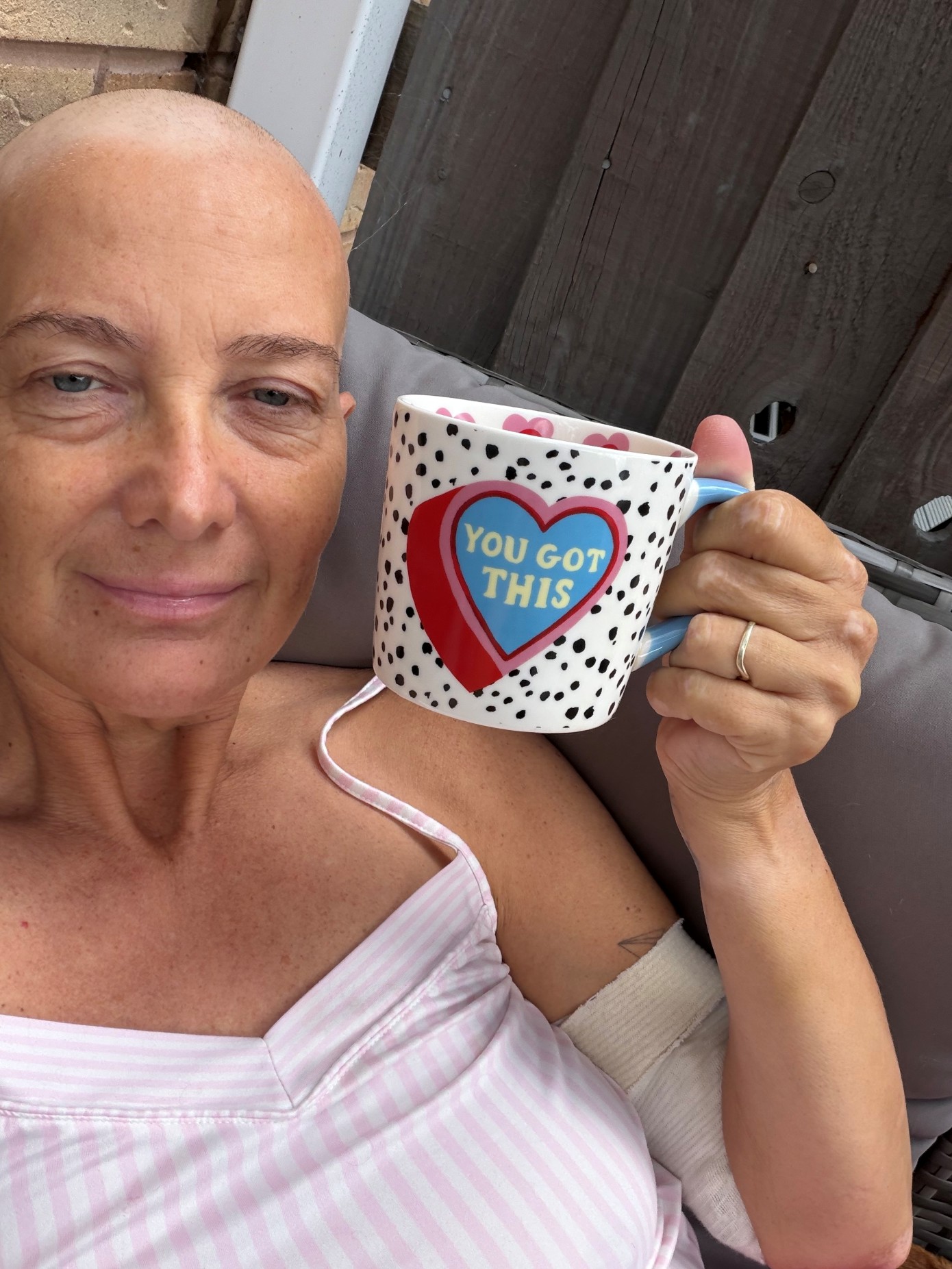 Nikola Dolphin-Rowland, a mum of 3 who will become a nana in November, is due to have a stem cell transplant in the coming weeks as she faces leukaemia, 28 years after her son did.
Mrs Dolphin-Rowland, from Melton Mowbray, was fit and healthy, completing a half marathon a few weeks before she feared she had leukaemia. She recognised the signs as her eldest child, Joe Carnell, had acute lymphoblastic leukaemia as a 2-year-old. He got the all clear after 3 years of chemotherapy and is now a stepdad of 2 and expecting his first child next month. On 18 May this year, 28 years to the day that Joe was diagnosed, Nikola was told she had acute myeloid leukaemia.
The 51-year-old, who also has a son, Harry Carnell, 25 and daughter Imogen Lindsey, 23, has had 3 rounds of chemotherapy and will need a stem cell transplant before the end of the year. She says: "It was a shock but I also knew. This has brought back what Joe and we went through although he didn’t need a stem cell transplant.
"My whole family are registered for stem cell donation but doctors said I needed an unrelated donor. It was nerve-wracking waiting to see if there was a matching donor, your life is in the balance.
"I had a match within a few weeks, I was so happy. I can't thank people enough for registering, it is such a selfless act. Donors are amazing.
"I am nervous and also excited about my transplant, I'll do whatever it takes to be a Nana.
"I can plan for the future now, the first thing I will do is a park run and have so much family time. I'm going to hug my granddaughter and never let her go, I can't wait to be Nana Nik."
Urging people to join the NHS Stem Cell Donor Registry, Mrs Dolphin-Rowland adds:
"People need to look after each other, be willing to help, you never know when you might need help.
"Saving someone's life is the most selfless thing you can do. It's not a difficult process to save a life.
"Stem cell donors are giving someone a chance at life, someone is giving me my life back and the chance to be a Nana."
Registering as a potential stem cell donor is easy. When someone is a match it can be life-saving – in many cases, a stem cell transplant is a patient's only chance of a cure.
Donation is usually done via the blood – a special donation where stem cells are filtered out of your blood and the rest of the blood returned to your body. In one in ten donations, it can be best to have a procedure to take them from the bone marrow.
Statements
How you can help
All blood, platelet and plasma donors aged between 17 and 40 are eligible to join the NHS Stem Cell Donor Registry and can do so at their donation appointment.
Find out more about joining the NHS Stem Cell Donor Registry and the donation process.
And if you are not already a blood donor, please register and book your first appointment to start saving lives.
Press release notes
- 29,171 blood, platelet and plasma donors joined the NHS Stem Cell Donor Registry in 2025/26
- 4,965 people who registered in 2025/26 were of Black, Asian and other ethnic heritages, up from 4,693 in 2024/25 - a percentage increase of 5%
- Currently only 12% of people registered are of Black, Asian and mixed heritage – 5.69% are Asian, 2.37% are Black, 3.88% are mixed. With less than 1% from other ethnic groups, around 77% white, around 9% unknown, less than 1% undisclosed.