

NHS opens largest ever donor centre as first site to collect blood, plasma and platelets under one roof
The largest donor centre in England has today opened its doors in Reading and is the first in the country where people can donate blood, plasma and platelets under one roof. The new centre will help secure future supplies of life-saving blood, platelets and plasma-derived medicines.
Reading Donor Centre, based at Reading Bridge House, officially opens its doors today (Tuesday, 20 October) with a celebration attended by VIPs including the Mayor of Reading, Councillor Paul Gittings, and Henry Firth and Ian Theasby, founders of BOSH!, a globally recognised plant-based food brand, who together cut the ribbon.
About the new donor centre
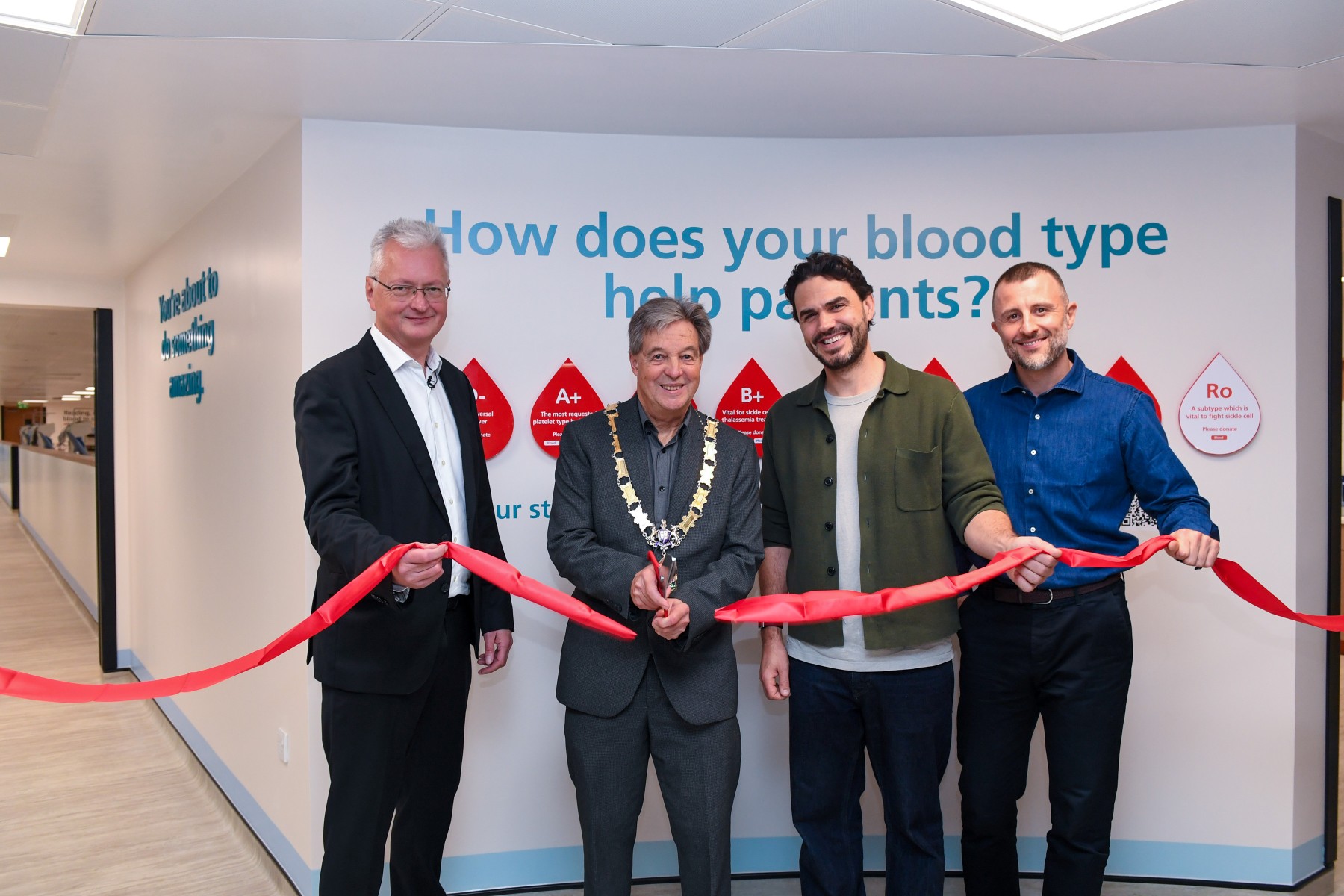 The centre spans approximately 11,000 sq ft and is the first of its kind for the organisation, featuring 16 plasma chairs, 3 blood chairs, 3 platelet chairs, and 3 additional chairs to support blood collection during periods of high demand. Plasma collection began on 12 October, whole blood donations started on 19 October, with platelet collections due to follow before the end of the year.
By bringing all 3 donation types together in 1 location, NHS Blood and Transplant is making it easier than ever for people in and around Reading to start or continue donating.
Frances O'Callaghan, Chief Executive of NHS Blood and Transplant, said:
"Reading Donor Centre marks a new chapter for NHS Blood and Transplant. It is our largest donor centre and the first in the country where our donors will be able to give blood, plasma and platelets under one roof for the first time.
"We can now offer donors a donation type that is right for them, whether that is whole blood, plasma or platelets. All life-saving components help us meet the needs of patients right across the country.
"I want to thank everyone in Reading who has already supported us and would encourage anyone thinking about donating, or returning after a break, to come forward and book an appointment to donate."
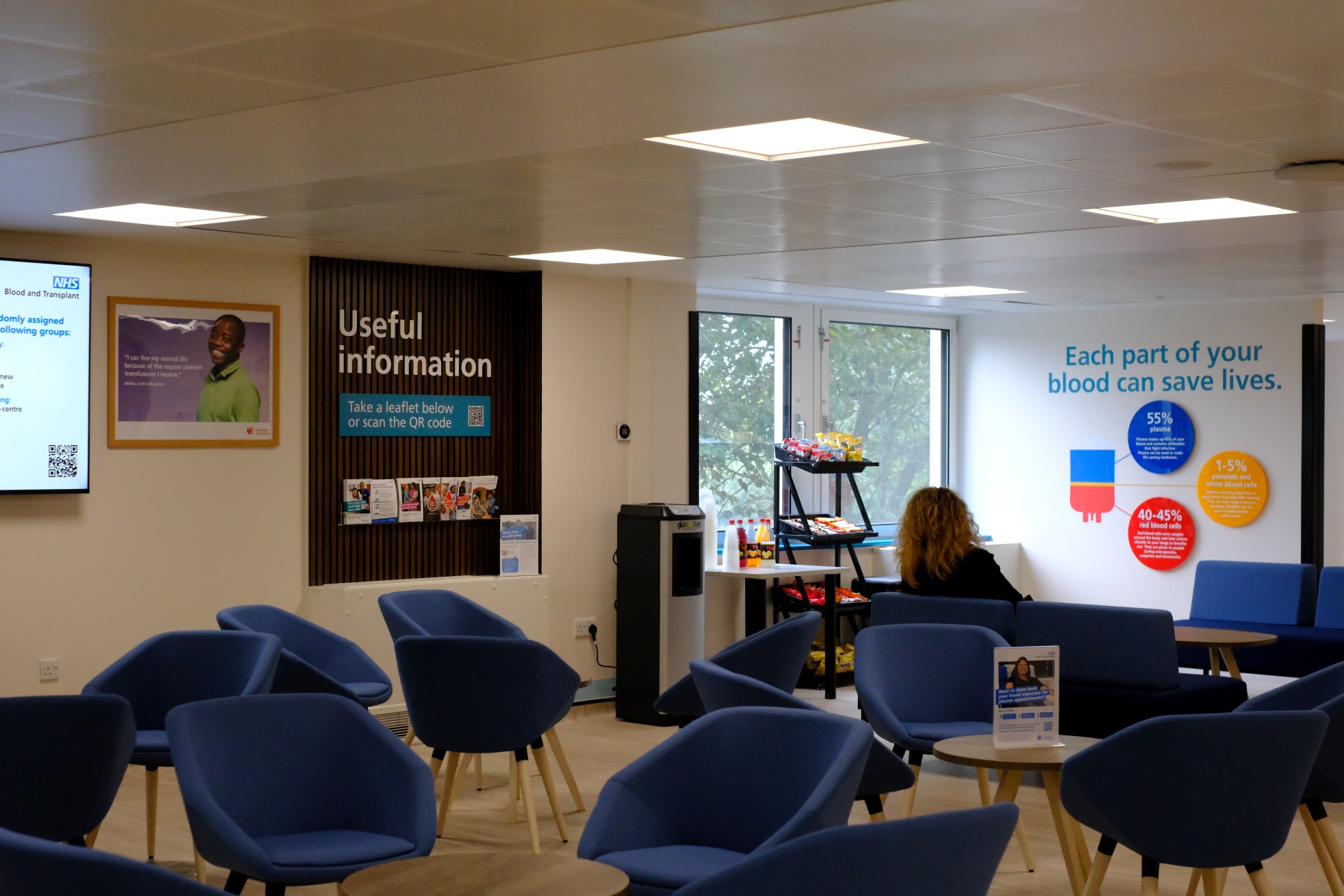 Over 5,000 blood donations are needed across England every day to help meet hospital demand. With transfusions needed for trauma and emergencies, new mums and babies during childbirth, as well as patients requiring regular transfusions for conditions including sickle cell disease, thalassaemia or cancer.
Plasma donations support NHSBT's work to build a sustainable domestic supply of plasma-derived medicines, reducing the UK's reliance on imports. Plasma can be made into immunoglobulins, which treat over 50 conditions including immune deficiencies, and albumin, which is used in surgery, trauma care and liver disease treatment.
Platelet donations support cancer patients and others who rely on regular platelet transfusions, particularly during cancer treatments when the body's platelet levels can fall to dangerously low levels.
Rooms within the new centre have been named after local landmarks and events, with many of the names suggested by donors who attended the previous temporary donor centre, as well as team members.
Previously home to one of only 3 specially dedicated plasma donor centres in England, over the last 12 months (between 12 October 2025 and 11 October 2026), the Reading team collected 10,992 plasma donations, totalling 7,224 litres of plasma.
During the same time period, the Reading mobile blood donation team also collected 22,851 blood donations. The Reading team will continue to run mobile blood collection sessions across the surrounding areas.
Jill's story
Jill Jones, 62, from New Marston in Oxford, was diagnosed with a primary immune deficiency in 2005, following treatment for non-Hodgkin lymphoma. She receives intravenous immunoglobulin (IVIG) infusions at the John Radcliffe Hospital (part of Oxford University Hospitals NHS Foundation Trust), every 3 weeks.
Since starting immunoglobulin infusions in January 2006, Jill has not needed hospital treatment for infections, except for a short stay with Covid-19 in 2021, from which she made a full recovery. She has now been receiving immunoglobulin for 20 years. In March 2025, Jill was one of the first patients in the UK to receive immunoglobulin made from UK-donated plasma.
Jill said: "Infusions have been life-changing for me in keeping me well. Before I started on them, I was regularly in hospital with infections, which just doesn't happen now. It's made a huge and positive difference to my life and my family's life.
"I would certainly have a very different life without my regular infusions and I am proud to have been one of the first patients in the UK to receive immunoglobulin that is now made from UK-donated plasma.
"There was one point several years ago when the nurses warned me that there might be a shortage of IVIG and that they might have to ration how much people were getting. It was quite a scary time, even though it never came to that.
"The thought that we are now collecting plasma donations in the UK is fantastic, as it means we are not having to solely rely on a supply from abroad.
"I would like to say a very big thank you to anyone who donates blood or plasma, on behalf of myself and all the other patients I meet on my regular trips to the hospital. You are amazing."
Josh's story
Army veteran Josh Boggi also knows the significant difference blood donors make. Josh, now 40, lost both legs and his right arm after stepping on an improvised explosive device while serving in Afghanistan in 2010.
In September 2019, Josh was cycling with friends in Majorca on his specially adapted hand bike when his tyre burst, sending him into a head-on collision with a lorry. He suffered a broken hip and a shattered upper leg, which required a further 6 inches to be amputated.
Josh received 10 units of blood in Spain before being flown back to the UK, where he had a further 11 units at Salisbury District Hospital. He went on to develop sepsis and spent 10 weeks in hospital, needing 21 units of blood in total. These were all of O negative blood, the universal blood type.
Josh, previously an O negative blood donor himself, is no longer able to donate. However, his wife Anna remains a regular donor.
Josh said: "If it wasn't for the blood donors, I wouldn't be here today. It is as simple as that. Every single person who gives blood is giving someone else the chance to life that I was given.
"The opening of the new permanent donor centres in Reading means that more people than ever can step up and donate. I urge anyone who can donate to come along and give it a try."
Jake Carpenter, 28, a consultant from Andover has been a committed donor since he was 18, after noticing a van parked outside his local leisure centre promoting blood donation. He has donated regularly ever since and has now made 13 blood and 56 plasma donations.
Jake switched from blood to plasma donation and now travels to Reading to do so every fortnight, fitting appointments in around work, thanks to evening and weekend availability at the donor centre.
Jake hopes to be among the first people to donate platelets when collections begin at Reading Donor Centre later in the year, meaning he will have given blood, plasma and platelets, the complete trio.
Jake said: "I started donating blood when I turned 18, then switched to plasma because I knew how important plasma is for making life-saving medicines. I am also aware of the need for us to improve our resilience, rather than relying on imports of plasma medicines from other countries.
"Being able to give blood, plasma and hopefully soon platelets, means I have done my bit across the board. The staff are brilliant, it fits easily around work and social life, and it is a chance to do some good while catching up with friends I have brought along to donate too.”
Councillor Paul Gittings, Mayor of Reading, said: "It's wonderful to see Reading become home to the largest blood donor centre in the country allowing for plasma, blood and platelet donations to take place all under one roof. It is truly heartening to think of the amount of lives which will be improved, or even saved, as a direct result of our town’s new donation centre.
"Reading is a generous town by nature, as the donation figures over the last 12 months show, and I’m sure we will see donations rise again with the opening of the Reading Donor Centre."
Henry Firth and Ian Theasby, BOSH! said: "We're delighted to be part of the opening of this new donor centre. At BOSH!, we're passionate about helping people live longer, healthier lives, which is why we’re so proud to help blood and plasma donors stay healthy, so they can keep giving to those who need it. Donating takes just a short time out of your day, but it makes a life-saving difference. We hope this new centre inspires many more people to roll up their sleeves and start saving lives."
How you can help
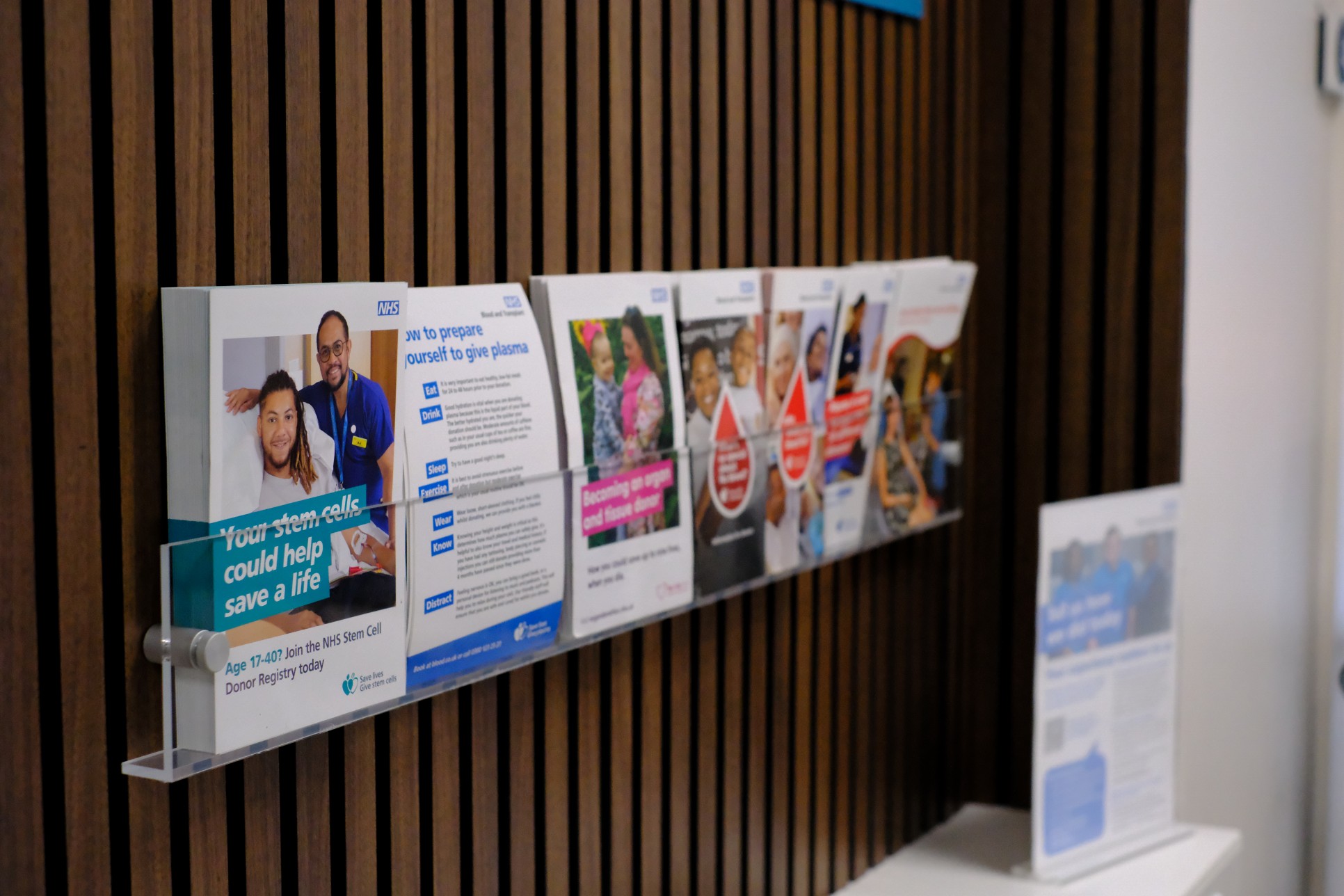 An appointment to give blood takes around an hour, with the donation itself taking 5 to 10 minutes. Male donors can donate every 12 weeks with female donors donating every 16 weeks.
An appointment to give plasma takes up to 90 minutes, with the donation taking around 35 to 45 minutes. Plasma donors can donate as often as every two weeks if they choose.
Reading Donor Centre is located on the first floor of Reading Bridge House, Reading, RG1 8LS.
To book an appointment, visit our website or download the NHS Give Blood app.