
Donors whose blood has been used the most times to save unborn babies
NHSBT can reveal the donors whose blood has been used the most times to make the product used in one of riskiest, most complex and rarest lifesaving transfusions – given when a baby is still in the womb.
There are 8 blood donors whose blood has been 3 times each to make blood for this special type of transfusion, which is only given to extremely unwell babies.
Known as an intrauterine transfusion (IUT), it involves making carefully selected donors blood into small packers of extremely concentrated red cells, which are then transfused via needle – usually into the umbilical cord - and guided by ultrasound.
IUTS are only carried out in specialist centres. Only around 180 IUT units are issued by NHSBT to hospitals each year, out of a total of 1.87 million units of blood components issued by NHSBT to hospitals each year (including red blood cell products, platelets, and plasma products).
To make the blood as safe as possible, donors needs to be O group, Kell negative (the third most clinically significant blood group (after ABO and Rh), male (to reduce the risk of antibodies from past pregnancies, brief ones unnoticed by the mother), and also negative for cytomegalovirus.
The blood for IUTs goes through an even more specialist manufacturing process than blood made for newborns. It has to be processed within 12 hours of donation and used within 5 days (for normal blood it’s 35 days). It's made into very small packs suitable for the size of a baby but each one is super-concentrated with red blood cells, with an 80% haematocrit level, about double that of blood.
About the donors
The record holding 8 donors include:
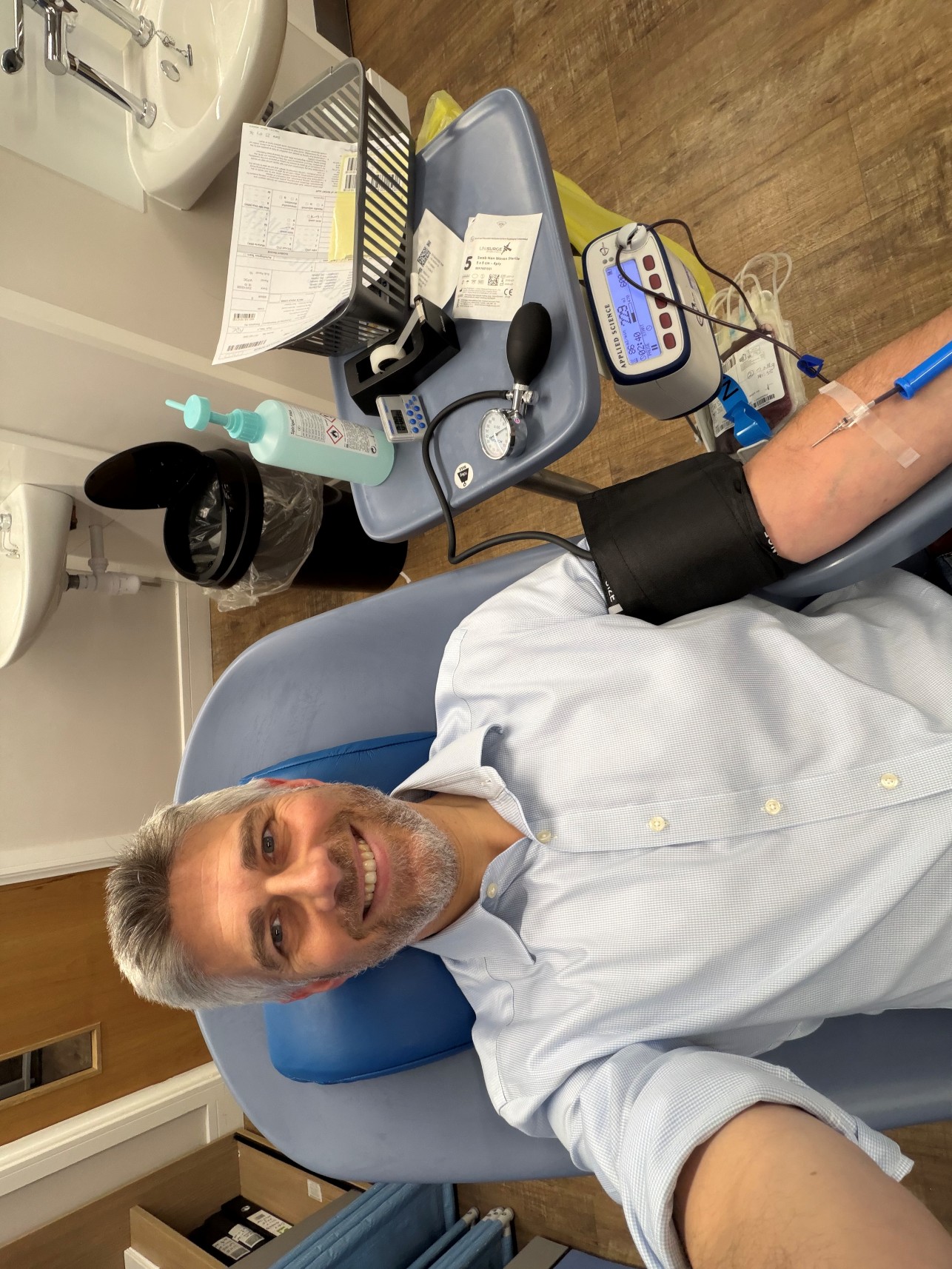 Paul Bickley, aged 45, from South West London, a married dad of 4, and a senior executive in the insurance industry, who said:
“I started donating because I was inspired by my mum, who always has done. She has a generous heart and helped me realise giving blood was a simple way to literally and metaphorically give back to society.
"My faith and the privilege of having my own children show me how precious life is, and that - plus some healthy competition with my mum - kept me giving blood. Donating is easy, a rare moment of being relaxed and still, supported by friendly staff, and with plenty of biscuits afterwards.
"Hearing my blood has helped unborn babies was mind-blowing and moved me to tears. It’s incredible that such a small act on my part could contribute to something so life-changing.”
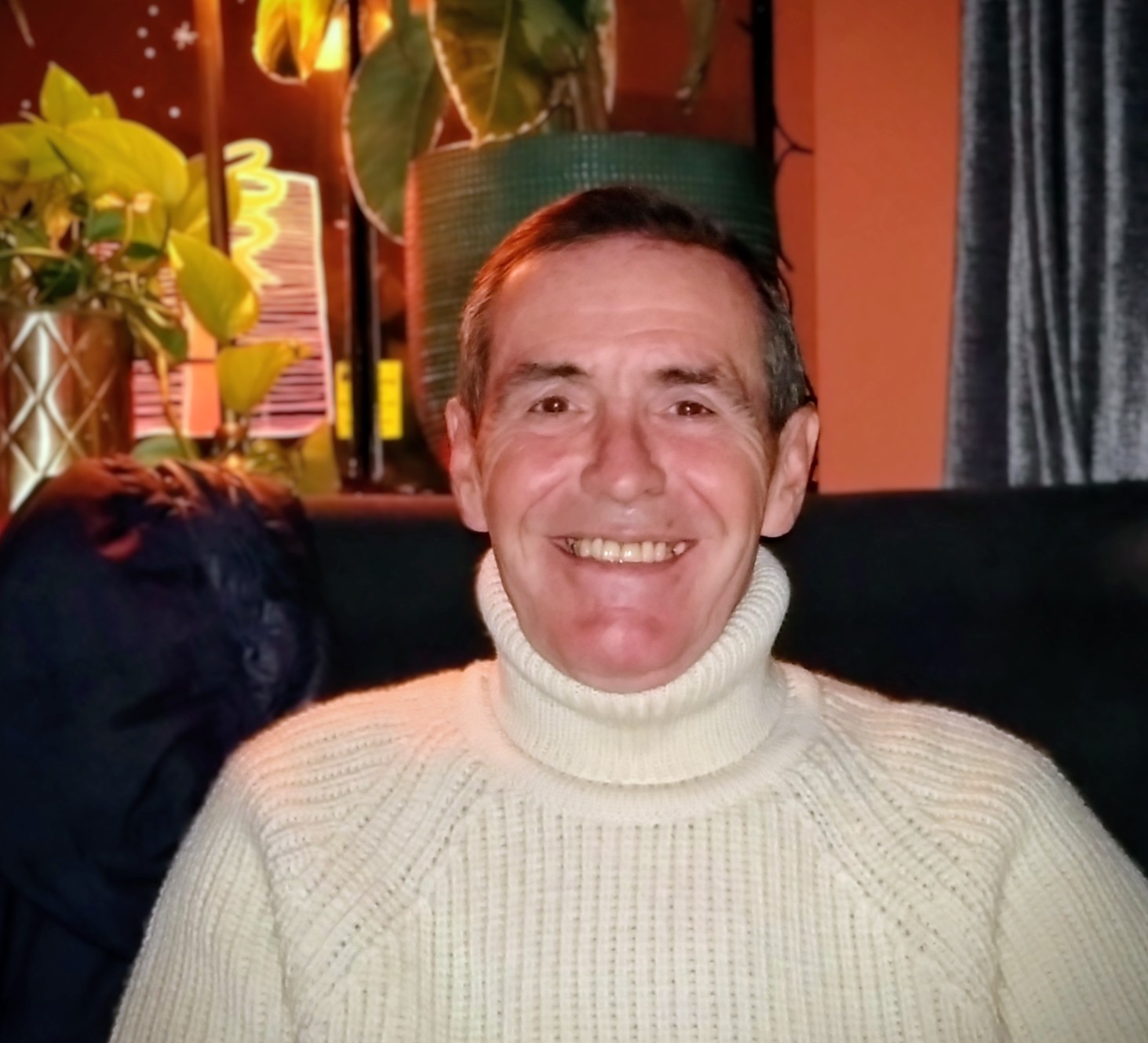 David Smith, 64, of Westminster in London, is a retired heating and ventilation engineer, who has donated more than 80 times.
He said: "When I found out I was O negative I thought I would keep doing this. You can't not do it if you can help babies, you have to! I am always pleased I am doing some good for somebody.
"It's always a pleasure to donate, whether it's used for babies or for anyone. I've never had a problem- it's all done very professionally. It's a good experience."
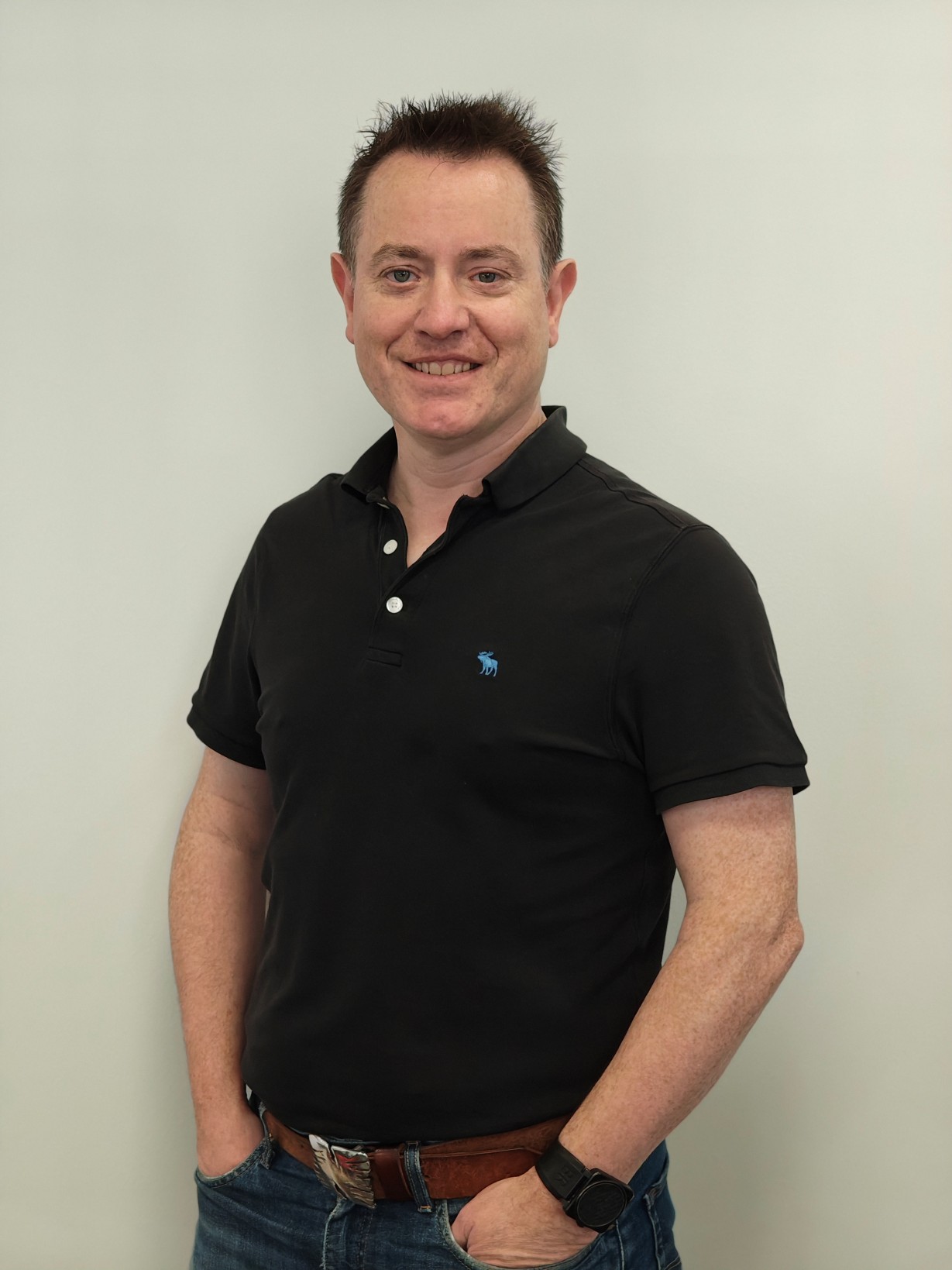 Steve Barringer, aged 52 of Greenwich in London, who works in technology for the Bank of England, said:
"I donate every 3 or 4 months and have donated 85 times. Donation doesn’t take a long time, and the staff are really friendly.
"I was just looking back through the text messages you receive telling you where your blood has gone to be used and mine recently went to Luton & Dunstable University Hospital, which is where I was born, it's also been used at Great Ormond Street Hospital.
"It’s fantastic to know my blood can be used for newborns and unborn babies. It's a nice surprise to find out my blood has been used for this the joint most."
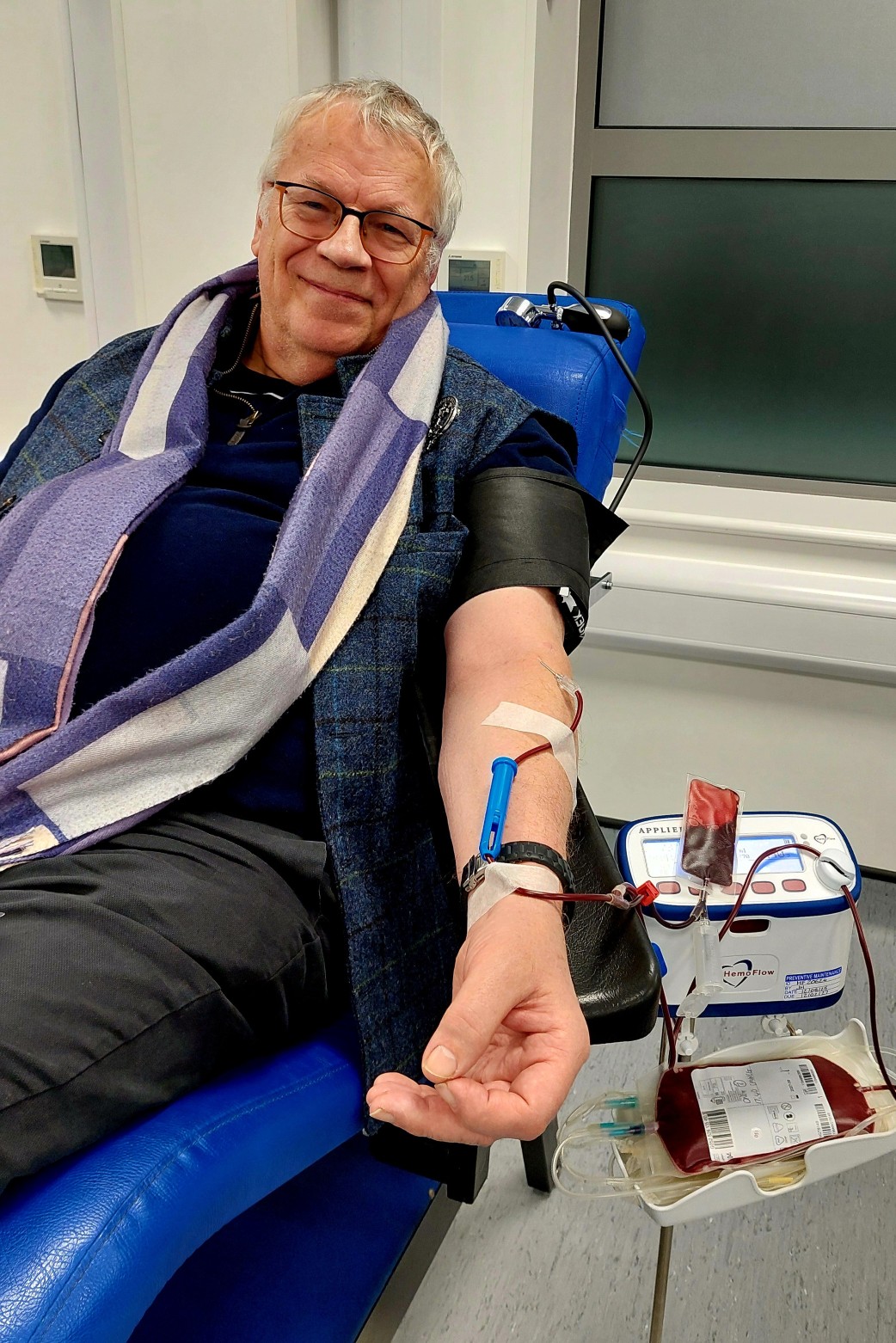 Graeme Kay, 70, a classical music journalist, choir conductor and former BBC Radio 3 and 4 music producer, from Orford in Suffolk, who has donated more than 60 times.
He said: "I find it quite relaxing to donate once the needle is in, you can do nothing except look at your phone or daydream. The whole environment is really nurturing, being with the donation team and seeing other people stepping in to donate.
"Knowing you are helping an unborn baby does add extra value to the feeling of donating. It makes you feel good. It’s amazing to know my blood has been used for this the joint most in the country."
Dr Anne Kelly, Paediatric Transfusion and Components Clinical Expert for NHSBT, said:
"Intrauterine transfusions are very rare. They are only done in specialised units when absolutely needed to help save a life. They are performed for the treatment of fetal anaemia, most commonly due to haemolytic disease of the fetus and newborn
"We only supply from blood from carefully selected donors and extra safety measures are applied as the patients are particularly vulnerable recipients because of their small size and developmental immaturity. While they can be given as late as 34–35 weeks gestation, most are given earlier. The procedure is carried out under continuous ultrasound guidance.
"We're incredibly grateful to these donors whose blood has been used the most times for IUTs and we urge anyone who has been inspired to consider registering as a blood donor at blood.co.uk."
How donations save lives
Maisie Ransom's son Arthur had a lifesaving intrauterine transfusion at St George’s Hospital in London while he was just 16 weeks old – his doctors told mum they think he was the youngest patient ever to have one in the UK, based on searches of published literature.
Arthur contracted parvovirus – slapped cheek syndrome – from his mother while was still in the womb.
The virus is usually harmless but can be serious for babies and neonates due to their immune systems not being fully developed and in Arthur’s case it made him severely anaemic.
That in turn led to a dangerous accumulation of fluid – known as foetal hydrops - which led to Arthur having heart failure.
The urgent blood transfusion delivered oxygen to his body, so the fluid around his heart and organs could be reabsorbed, reducing strain on his body and heart and allowing normal function to eventually return.
Arthur was born in January 2025 and is now doing well.
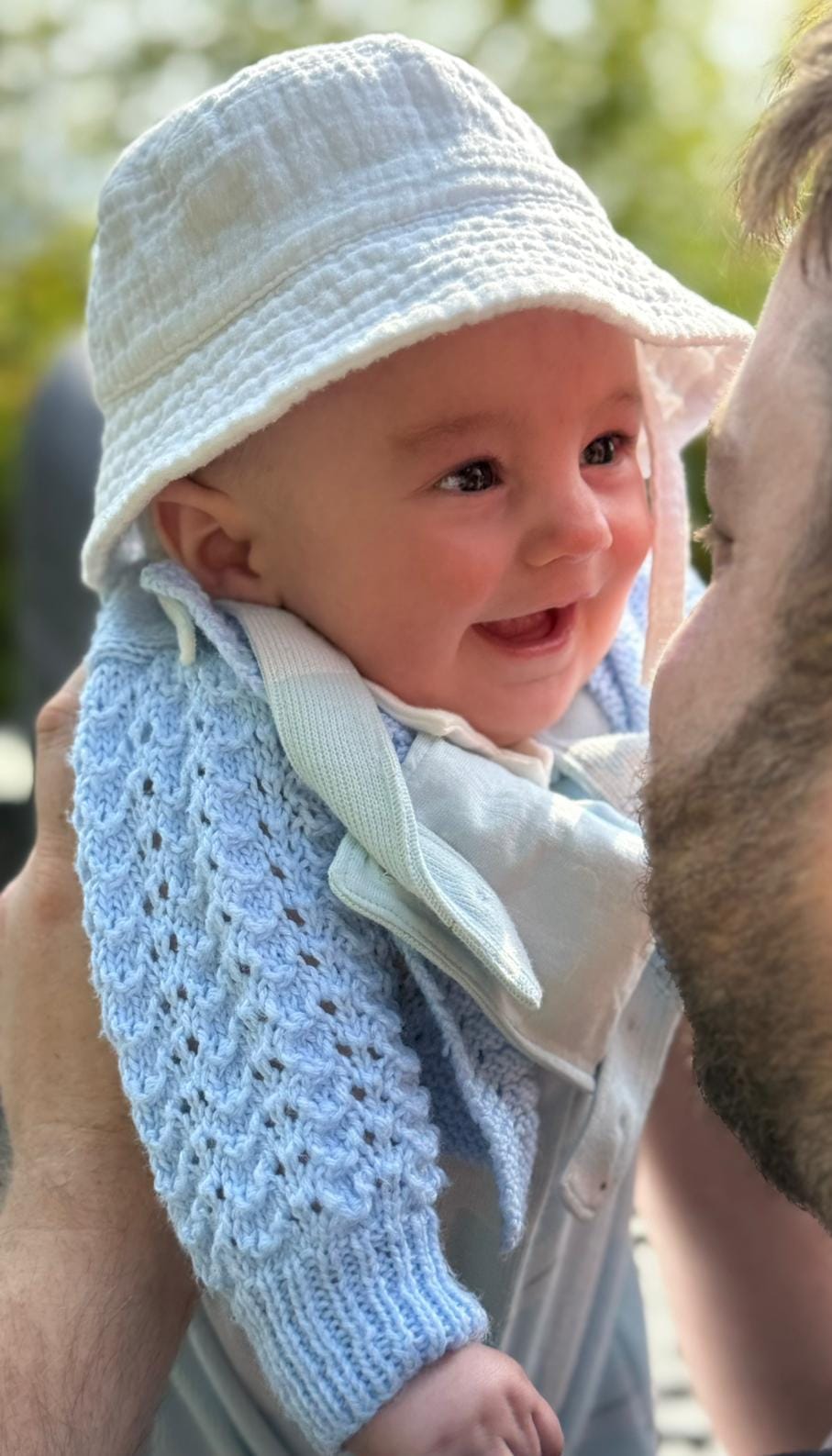 Mum Maisie, 30, from Cranleigh, a primary school teacher, is married to Keith Ransom, 36, a manufacturing manager.
She said: "The experience was absolutely terrifying. The doctor said it was 50/50 whether he would make it not.
"I can remember they put him to sleep before they brought the blood in. It was hanging up and I was thinking it was an odd thing that someone else’s blood could potentially save him. I remember feeling grateful and quietly hoping that it would be enough to keep our baby fighting.
"The first thing they did was remove some of the fluid around his heart with needles then they gave him the transfusion with a needle into this liver. The doctor had to be incredibly precise and I am still baffled at what she was able to do in that room.
"There were a lot of people, it took a lot of skill and steady nerves. The room was silent other than when the lead surgeon was speaking. Once the procedure was over it felt like everyone was frozen, waiting to see if he would survive that initial step.
"I felt a lot of pressure as I had to stay completely still so they don’t hit something they shouldn’t. He was so small the doctors were working within millimetres. I could not actually watch as it felt too much.
"Then they gave us a little room we wanted I there waited for about an hour and a half to say they could scan to see if he was still alive. Thankfully he was getting better, something no one expected at this point, we thought it would take a lot more blood.
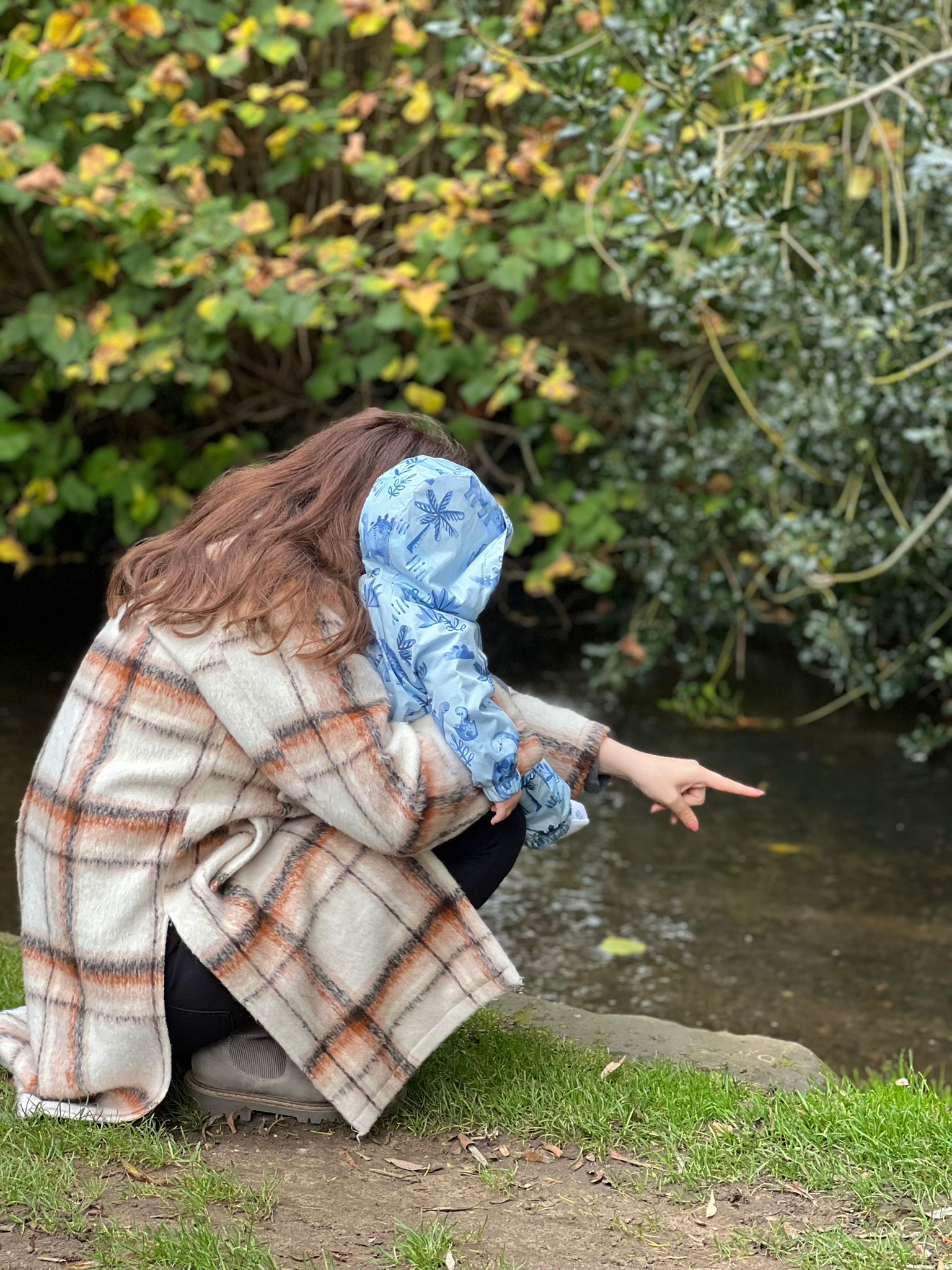 "Without that blood he would not have made it. His organs were failing. His heart was completely enveloped in fluid. It was struggling to pump. If nothing was done he would not have made it much longer. The doctor does a lot of research as part of her role and she said to the best of her knowledge there was no-one younger to get an intrauterine transfusion.
"Arthur's doing great now, he’s a really chirpy little boy, reaching all the milestones. He's very handsome and developing normally. He keeps us on our toes. I think every day about how lucky I am.
"I don’t think there are words to describe how thankful I am to blood donors. To have the life I am now living, with my family, there’s no words to express the gratitude I feel and how fortunate I was to be able to access that care and blood promptly.
"I do often wonder who the person to donate was as would love to tell them that their decision to give blood, gave my boy the chance to be here."
Dr Luci Etheridge, Consultant Paediatrician and Chief Medical Officer at St George's, said:
For babies like Arthur, a blood transfusion while still in the womb can mean the difference between life and loss. We are proud to provide this highly specialised, lifesaving care at St George's, and are deeply grateful to the donors whose generosity makes this possible, as well as to NHS Blood and Transplant for their vital and ongoing work."
How you can help
To find out more, book an appointment or register as a blood donor, please visit our website, download the NHS Give Blood app or call 0300 123 23 23.