

Cancer survivor and long-time plasma donor urges new donors to step forward this January to donate blood or plasma
Stephen Franklin, 60, from Hollywood in Worcestershire has been a dedicated plasma donor since 2020 and is now encouraging others to come forward, after a cancer diagnosis meant he can no longer donate.
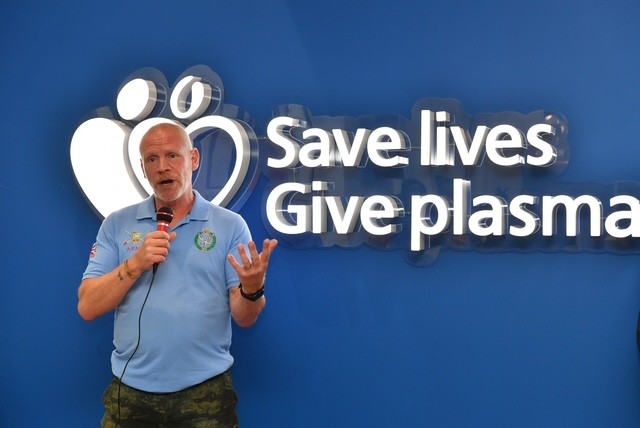 As a prostate cancer survivor, Stephen is keen to continue to be an advocate for plasma donation and this January is calling on people to pick up the mantle for him and book their blood or plasma donation appointment today.
Donated plasma in England is now being transformed into life-saving medicines for patients with rare and serious conditions. NHS Blood and Transplant (NHSBT) collects plasma at specially dedicated donor centres in Birmingham, Reading and Twickenham, as well as through whole blood donations.
Since the first UK-donated plasma medicines reached patients in March 2025, more than 2,200 NHS patients have benefited from these vital medicines.
Stephen's story
Following a low haemoglobin deferral at one of his regular plasma donation sessions, Stephen went to his doctor for further tests, with the aim of finding out how he can get back to donating. This visit to the doctors spiralled into several different medical appointments and further medical examinations that eventually, sadly, led to a prostate cancer diagnosis in May 2025.
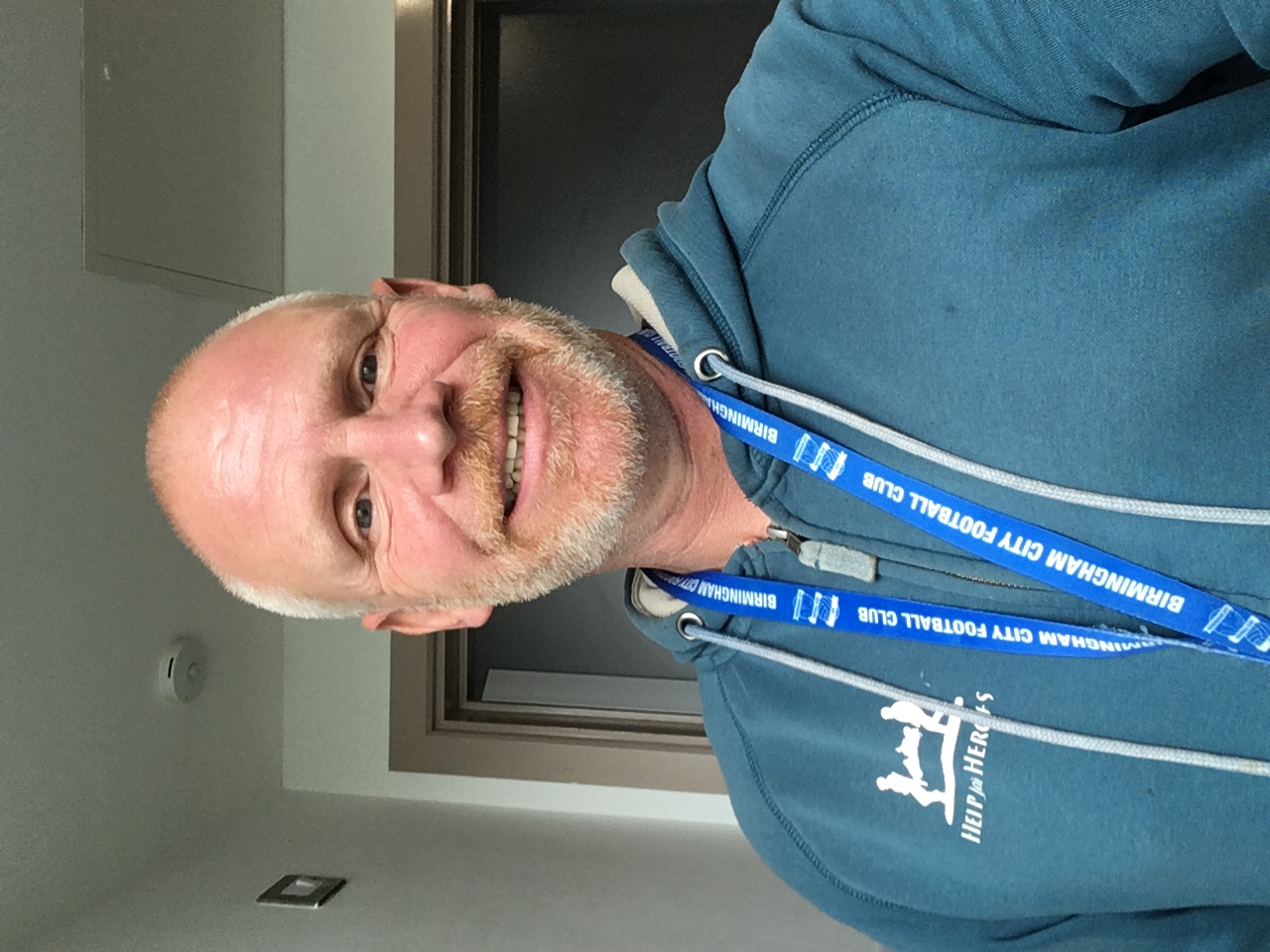 Stephen said: "I had an enlarged prostate for about 10 years, and I was on medication for this, but it was all managed and I had not noticed any other changes to my overall health.
"I was very fortunate that the doctors I visited were all diligent and although at first sight there was nothing majorly wrong with me, they continued to refer me on for further analysis in a 'just in case' type of situation.
"My PSA (Prostate-Specific Antigen) test results had been monitored for a long time and even though my PSA levels were not in the danger zone, the doctors were diligent and thorough to check everything."
It was after these further 'just to be on the safe side' visits to various medical appointments that Stephen was diagnosed with prostate cancer.
Stephen added: "I am lucky, very lucky with the care I have received through the NHS, and I can only thank everyone who helped me in my recovery.
"It is remarkable to think the small finger prick blood test – part of the usual pre-screening before each plasma donation – actually picked up my low iron and ultimately, set off a chain of events that led to my cancer diagnosis."
Following his last donation in January 2025 when Stephen was unable to donate plasma due to a low haemoglobin reading, it was only a matter of weeks before he received the shock news that he had prostate cancer. This was on 8 May 2025, during VE Day – a significant day for him as a veteran, having served in the army as a helicopter co-pilot.
Reflecting on the moment he received the news, Stephen, a dad of 2, said:
"It was during the 2 minute silence as I left the hospital after hearing the devastating news. I just stood there, trying to process everything that just happened."
In August 2025, Stephen had his prostate surgically removed – just a day after his 60th birthday.
Stephen was a blood donor before becoming a dedicated plasma donor for 5 years, collecting more than 150 credits for his blood and plasma donations in the process, and has been a powerful advocate for plasma donation.
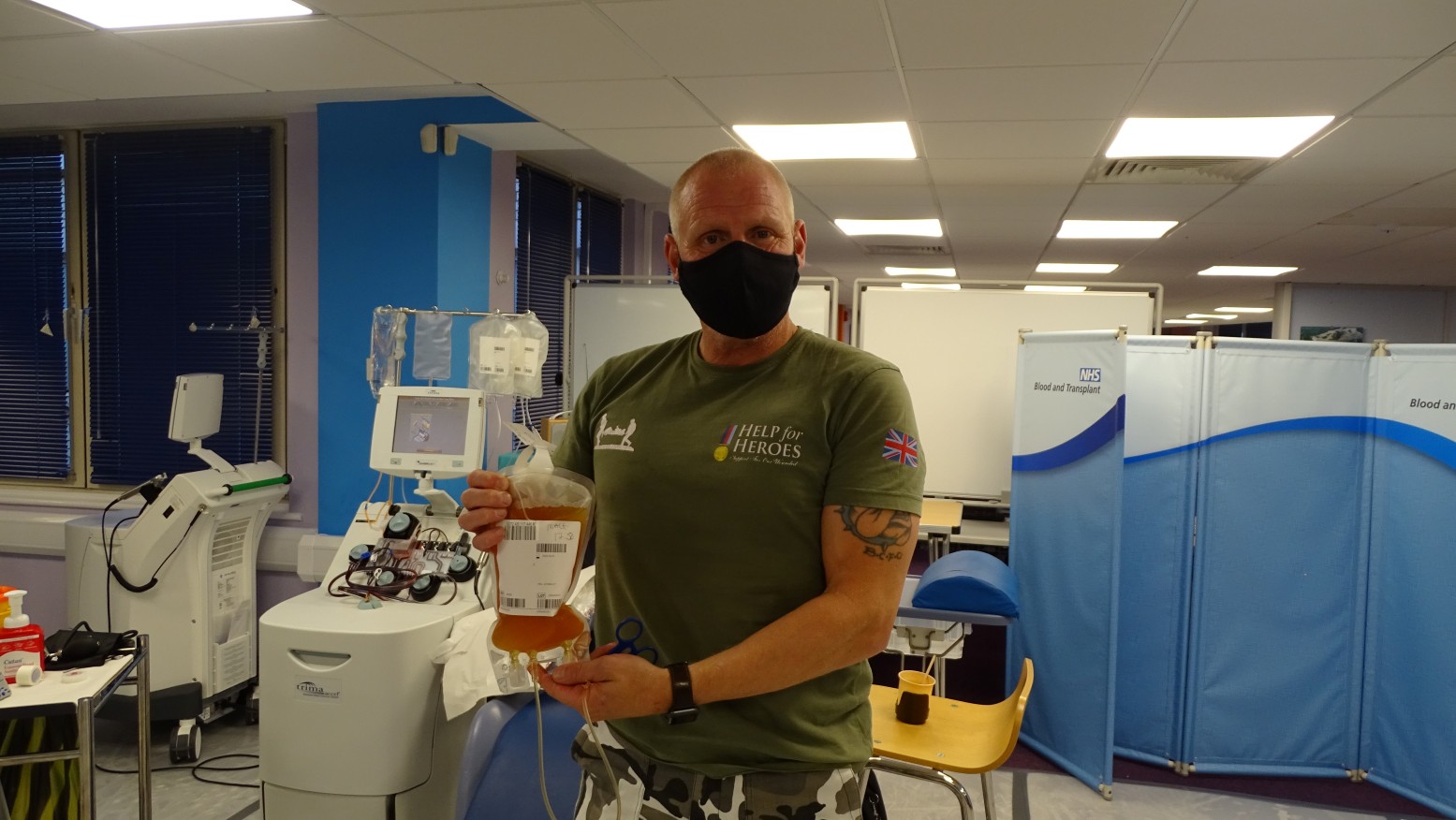 After contracting COVID-19, the former army helicopter co-pilot and retired firefighter of 27 years, bounced back to try and help other coronavirus victims by donating more plasma than anyone else to a treatment trial in England. At the time he was the first person in the UK to hit 10 donations of plasma for the COVID-19 convalescent plasma programme in 2020. After this trial came to an end, Stephen continued to donate plasma regularly as the NHS started to build up stocks of plasma to start producing vital life-saving medicines.
Speaking about how he started donating plasma as part of the convalescent plasma trial, then as a source plasma donor at the centre in Birmingham, Stephen said:
"I wanted to do something to help people and it was nice just to be able to give something back. Donating was so straightforward and became part of my monthly routine. I donated every 3 weeks like clockwork, because you can donate plasma every 2 weeks, and unlike blood donors, you are not limited to donating only 3 or 4 times a year.
"I know that my donations have made a real difference and helped to make somebody better. This gives me such a warm feeling to think I was helping someone.
"I will definitely miss that feeling and am putting a call our for people to pick up the baton and donate instead of me. I would say to anyone else, please do it – it’s such a great thing to do."
Stephen is now in remission and at the end of November 2025 was able to return to working as a teaching assistant in a school for pupils with special educational needs. He is also an avid runner who has previously completed marathons with his wife Jayne. He is looking forward to regaining his strength so he can run again and raise money and awareness for causes that are close to his heart.
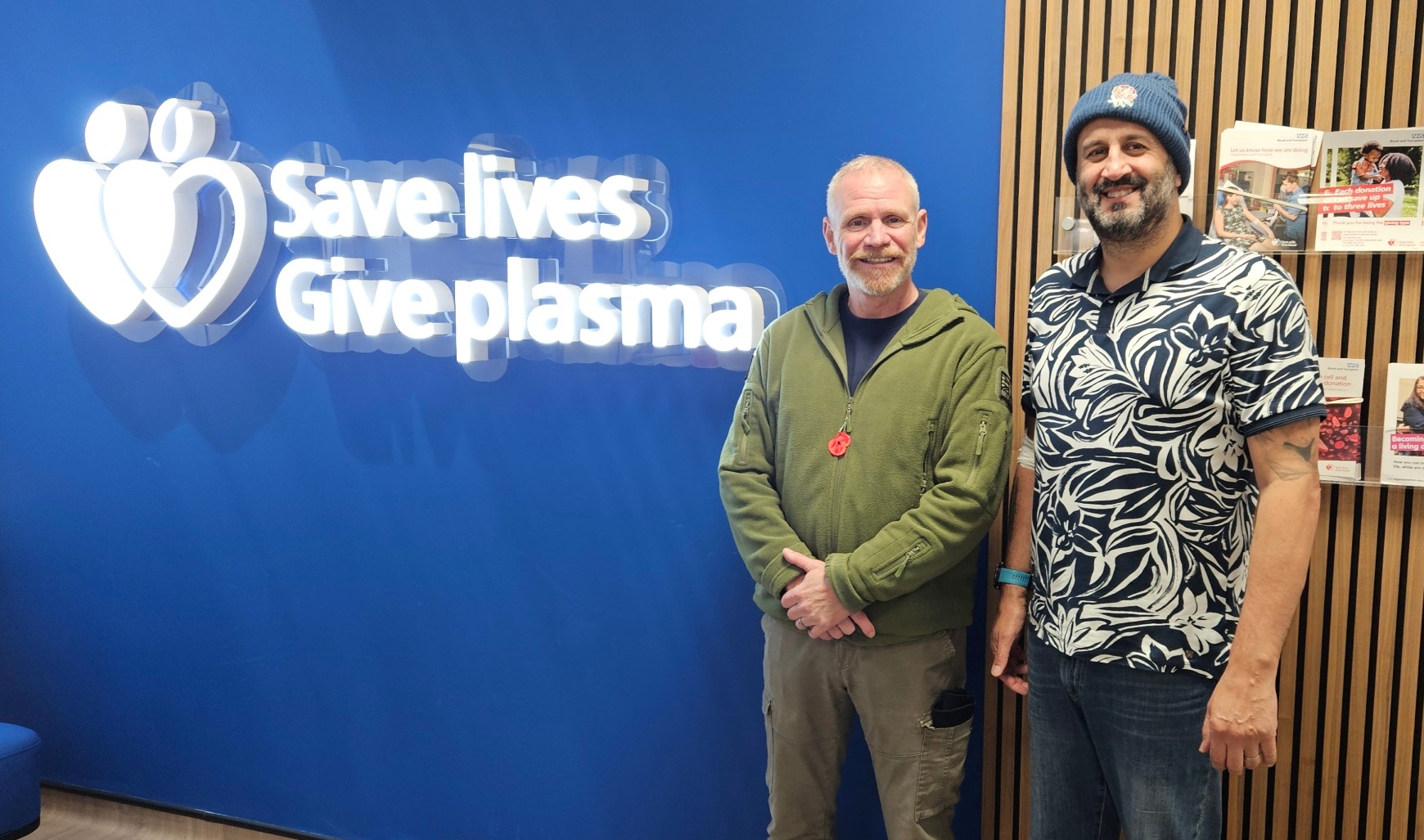 Stephen said: "I am gutted I can no longer give plasma – it was a big part of my routine. I religiously donated every 3 weeks so it was hard to hear that I could never donate again after my diagnosis. However, I know I can still help by inspiring others to donate in my name.
"The staff at the donor centre are so kind and professional. I will miss seeing them regularly, but I still look forward to popping into the donor centre to say hello whenever I am in town.
"Although I can't donate plasma anymore, my work here isn't over yet. I will be rounding up all my friends and family to donate plasma in my name now that I am no longer able to donate."
Recalling the day he shared the good news that he had received the 'all clear' with donor centre staff in Birmingham, Stephen said:
"It was a wonderful day. My old army colleague Farid, who I served with in Germany in the 1980s as part of the Army Air Corps, joined me at the centre. Farid donated plasma, and I shared the news with the staff – they were thrilled for me." Farid continues to donate regularly in memory of his late wife Susan, who received plasma as part of her treatment to try and reactivate her immune system to combat encephalitis.
How you can help
Mark Bailey, Birmingham Plasma Donor Centre Manager, said:
"Stephen's story is a powerful reminder of how every donation can make a real difference and I thank him for everything he has done to support plasma donation over the years.
"As we start the new year, January is the perfect time for people to make a resolution that truly saves lives and I urge them to join our community of blood and plasma donors.
"Plasma is used to create life-saving medicines for people with rare and chronic conditions, and demand is growing every year. Even if you’re not near one of our dedicated plasma donor centres in Birmingham, Reading or Twickenham, you can still help by donating blood at any session or centre across the country, as plasma is recovered from all whole blood donations."
Every blood and plasma donor makes a vital contribution to making these life-saving medicines. To find out more, book an appointment or register as either a blood or plasma donor, visit our website, download the NHS Give Blood app or call 0300 123 23 23.